
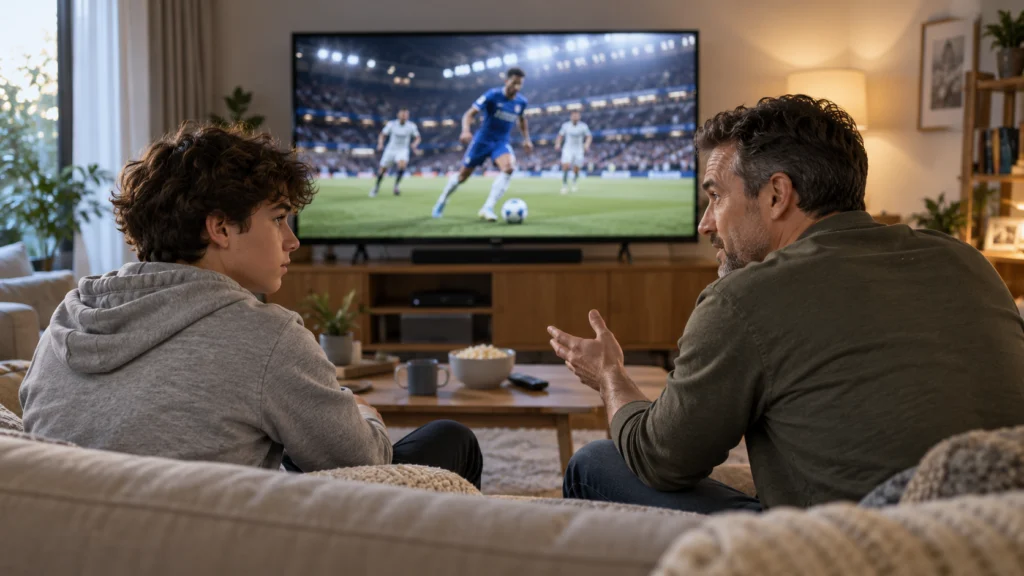
Sports betting advertising can appear alongside the teams and events a teenager enjoys. A useful parent conversation explains what the advertisement is trying to achieve without teaching a child how to gamble. Ask what they noticed before assuming what they believe.
Start with the message rather than a lecture
Choose an ordinary moment and ask who the ad is aimed at, what feeling it creates and what action it wants. Discuss the difference between enjoying sport and paying to risk money on a result. A familiar presenter or athlete does not make an outcome certain.
Keep the discussion about media literacy. Do not demonstrate account creation, compare bonuses with the teenager or use family money for a “lesson” wager. Adults should model a clear separation between watching and gambling.
| Element | Ask together | Key distinction |
|---|---|---|
| Celebrity or team imagery | Why was this person or logo chosen? | Familiarity is not evidence of a safe outcome |
| Winning scene | What is left out of the picture? | A selected story is not the full pattern |
| Urgency | Why should someone act now? | Pressure is not a reasoned decision |
| Promotion | What action benefits the advertiser? | Marketing is not independent advice |
Make room for honest questions
A teenager may know more about the advertising than an adult expects. Listen without ridicule and correct misunderstandings plainly. If they say peers are wagering, ask about the situation without demanding names as the first response.
CPS recommends parents engage with young people’s digital media and discuss content. CAMH explains that gambling can harm daily activities, finances and relationships. Those points support a calm conversation about consequences rather than a promise that clever prediction removes risk.
- Ask what the teenager has seen and how they interpret it.
- Explain that odds and advertising do not guarantee outcomes.
- Keep adult gambling accounts and payment access private.
- Seek appropriate professional support if gambling or spending is already causing concern.
Keep the door open after the first talk
Return to the subject when another example appears, without turning every match into a warning session. Encourage questions about advertising across different products so betting is understood within a wider media-literacy skill.
If there is evidence of actual harm, move beyond a general chat. Use appropriate school, healthcare or specialist support and protect the young person’s privacy while addressing the practical problem.
Questions and answers
Should I show a teen how a betting app works?
Do not turn the conversation into a gambling tutorial. Analyse the advertising and risks without facilitating participation.
Does liking sports make betting inevitable?
No. Watching, playing and discussing sport do not require a wager. Keep that distinction ordinary in family life.
What if my teenager dismisses the concern?
Listen to their reasoning, explain your boundaries and revisit the discussion calmly. Persistent concerns may need qualified support rather than an escalating argument.
Sources: caringforkids.cps.ca; camh.ca.