
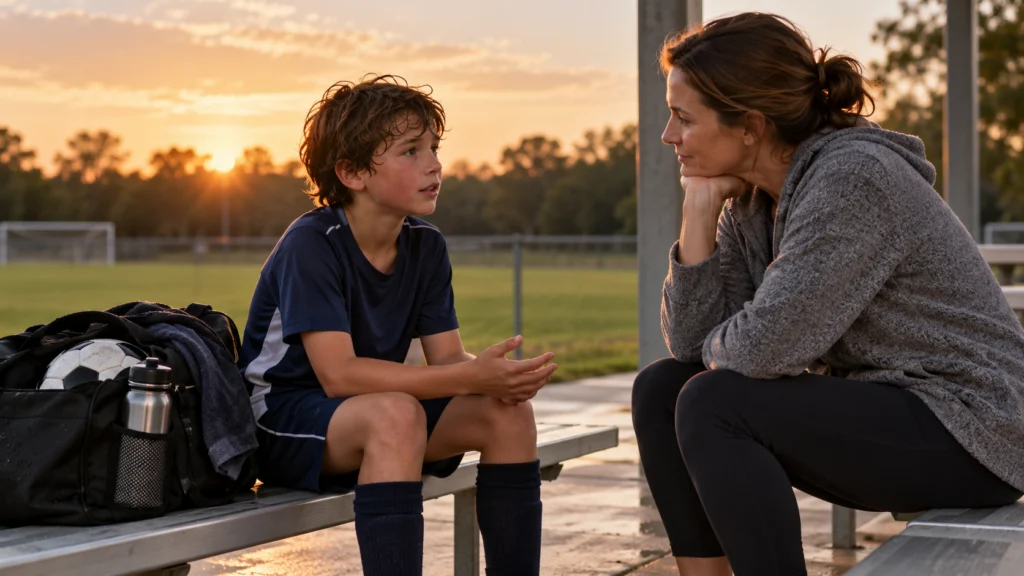
A child who once enjoyed an activity may become reluctant to attend. That change deserves curiosity rather than an immediate label. The reason may involve the schedule, social experience, expectations or something else entirely. A general guide cannot determine it from one complaint.
Ask about the experience in concrete terms
Choose a calm time and ask which parts are enjoyable and which are difficult. Questions about arrival, instruction, teammates and the journey home may be easier to answer than “Why don’t you like it anymore?”
Avoid comparing the child with a sibling or teammate. Their experience is the subject. A child can care about an activity while disliking part of its current environment.
| Area | Question | Possible next step |
|---|---|---|
| Schedule | Does the week feel too crowded? | Review commitments and rest |
| Environment | What happens during sessions? | Discuss concerns with the provider |
| Expectations | What feels pressured or unclear? | Clarify adult and coaching messages |
| Practical needs | Is equipment or transport difficult? | Resolve a specific barrier |
Separate ordinary frustration from a concern needing action
One disappointing event may not describe the whole pattern. Repeated distress, fear, unsafe conduct or a significant effect on daily life needs attention. Do not require a child to continue in a situation that raises a concrete safety concern simply to teach commitment.
Speak with the provider about specific observations where appropriate. Keep the child’s privacy in view and do not promise secrecy about information that requires safeguarding action.
- Listen before deciding what the reluctance means.
- Review the whole schedule and environment.
- Agree a clear short-term plan and a later check-in.
- Seek appropriate professional support for persistent or serious concerns.
Offer choices that adults can support
A shorter commitment, a different format or a pause may be possible, but check terms and practical arrangements. Avoid presenting only two extremes: continue unchanged forever or abandon the activity immediately.
If the child leaves, discuss what they learned without calling the decision a failure. Interests can change. The useful outcome is a considered decision that respects responsibilities and wellbeing, not a perfect attendance record at any cost.
Questions and answers
Does reluctance prove the child lacks resilience?
No. It is information to explore, not a diagnosis of character. Ask about the actual experience.
Should we stop after one bad session?
Consider the circumstances and any safety concerns. A planned review can help where there is no urgent issue.
What if the coach dismisses the concern?
Keep a clear record of the specific issue and use the provider’s appropriate process. Seek qualified support where the concern is serious or unresolved.