
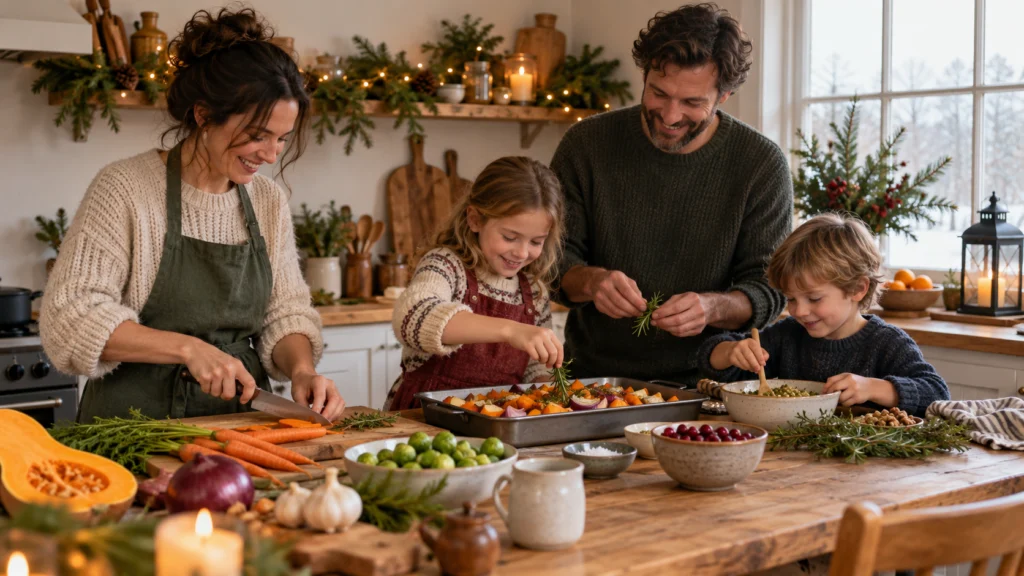
A family tradition becomes meaningful through repetition and participation, not its price. A short walk, a shared recipe or a familiar story can provide continuity without a large gift budget. Choose something the household can realistically repeat.
Start with what already works
Ask which small moments people remember fondly. The answer may be an ordinary breakfast or a game rather than the most expensive outing. Use those details to build a simple ritual instead of inventing a complicated annual production.
Keep participation flexible. A tradition should not require identical enthusiasm or a perfect photograph. Let people contribute in ways that suit their age, interests and capacity.
| Idea | Shared element | Keep practical |
|---|---|---|
| Seasonal walk | A familiar route and a small observation game | Weather alternative and suitable distance |
| Recipe evening | Cooking or assembling something together | A simple menu and clear tasks |
| Story collection | Photos or memories chosen by family members | Respect privacy and the option not to share |
| Home game night | A repeatable time together | No pressure to buy new games each time |
Make the work visible
A low-cost event can still require substantial planning and cleanup. Share those tasks and keep the scope modest. One adult should not have to hide exhaustion so everyone else can call the tradition effortless.
Set a spending boundary where supplies are needed. Avoid turning each repetition into an upgrade contest. Reusing decorations or materials can be part of the familiar experience rather than a compromise.
- Choose a ritual that fits the household’s ordinary resources.
- Share preparation and cleanup.
- Allow a shorter version during a demanding year.
- Review what people enjoy instead of copying an idealised image.
Let traditions change with the family
Children grow, schedules shift and family structures change. A tradition can keep its purpose while changing its format. Ask what matters most and preserve that element where possible.
If a ritual becomes a source of pressure or conflict, reconsider it. Continuing solely because “we always do this” may miss the reason it began. A simpler version can leave more room for actual connection.
Questions and answers
Must a tradition happen every year without exception?
No. A missed or adapted year does not erase its meaning. Explain the practical change and choose what remains manageable.
Do children need gifts for an occasion to feel special?
Gifts can be one choice, but shared time and familiar rituals can also mark an occasion. Avoid making one spending level a requirement.
What if family members prefer different traditions?
Alternate priorities or keep a small shared core with optional additions. The ritual need not satisfy every preference in the same way.