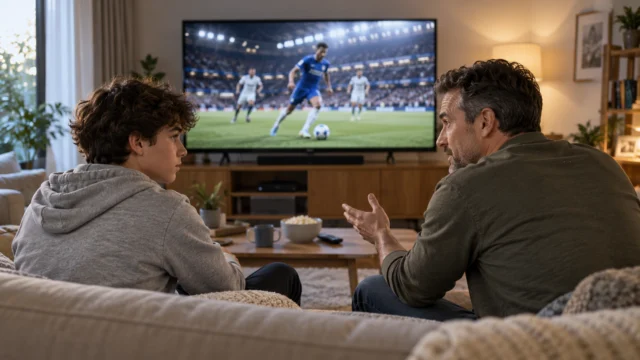
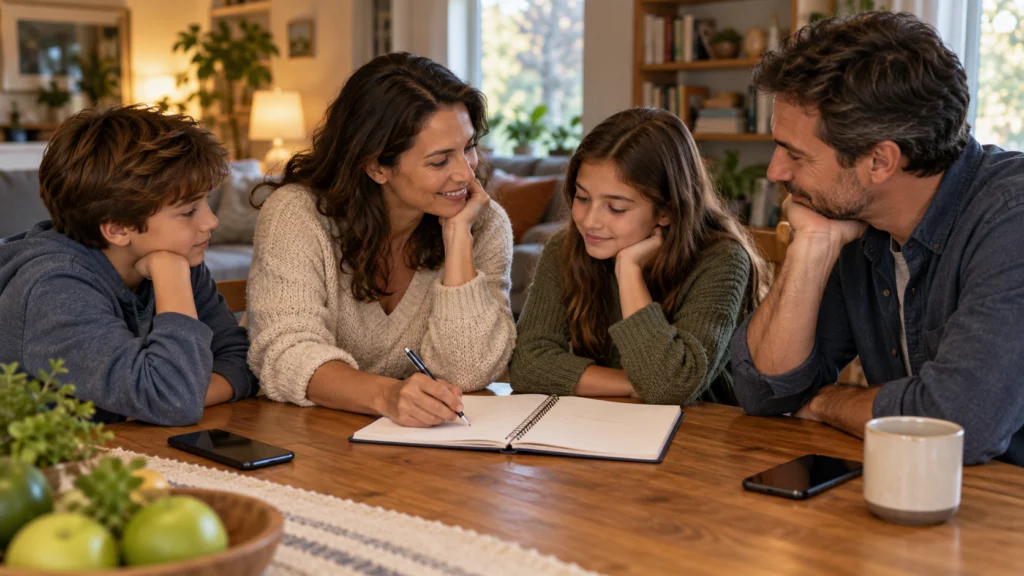
A screen-time disagreement often starts at the moment someone is asked to stop. That is a difficult time to design the whole rule. Discuss expectations during a calmer period and explain what the family is trying to protect: sleep, schoolwork, relationships or time for other activities.
Distinguish the purpose of screen use
Homework, a call with a relative and recreational scrolling are not identical activities. Ask what the child is doing and what makes stopping difficult. A plan should be understandable without pretending every screen minute has the same value.
CPS recommends a family media plan that is reviewed and revised, with adults engaged in children’s media experiences. Use that as a conversation structure rather than a punishment announced after one frustrating evening.
| Question | Agree together | Review |
|---|---|---|
| When | How screens fit around daily routines | Does the timing work? |
| What | Appropriate content and purpose | Are new concerns appearing? |
| Where | Shared or private use arrangements | Are privacy and safety needs met? |
| Stopping | A clear transition and reminder | Does everyone understand the end point? |
Include adult habits
A rule is harder to explain when adults ignore it during the same shared meal. Review background television, notifications and adult phone use as well. Modelling does not mean adults and children have identical responsibilities, but the difference should be explainable.
Avoid using the conversation to demand disclosure of every private thought. Discuss age-appropriate safety and privacy openly. Technical controls can support a plan but do not replace trust, supervision and dialogue.
- Choose a calm time to review the rule.
- Explain the routine or relationship the rule protects.
- Give a clear transition rather than repeated vague warnings.
- Revisit the plan when school, age or family circumstances change.
Respond to ongoing difficulties proportionately
One argument does not establish a disorder. Look at the wider pattern and whether screens interfere with sleep, school, relationships or offline activities. CPS advises speaking with a child’s doctor when persistent signs interfere with family life.
If the issue continues, seek appropriate guidance rather than escalating punishments indefinitely. The aim is a workable pattern and a child who can discuss problems, not a perfect chart of compliance.
Questions and answers
Should all screen use have the same rule?
Consider purpose, age and context. A family plan can distinguish schoolwork, communication and recreation while keeping essential routines protected.
Do parental controls solve the disagreement?
They can support agreed limits but do not replace explanation, engagement and review.
What if rules repeatedly lead to conflict?
Review whether they are clear and realistic, then seek appropriate professional advice if difficulties persist or affect daily life.
Sources: caringforkids.cps.ca.